Authors:
John Dorsch, Mark Coeckelbergh & Tillmann Vierkant
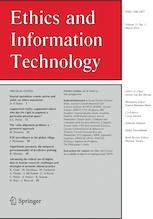
Synthese, 208, Article 164 (2026)
Zenodo: https://zenodo.org/records/22939050
DOI: https://doi.org/10.1007/s11229-026-05820-6
Visit
Abstract:
Does artificial intelligence (AI) threaten deliberative democracy? This paper argues that it does, not because it isolates citizens in simplistic “filter bubbles” understood as ideologically homogeneous silos, but because it hijacks the capacities through which beliefs are evaluated. While early accounts emphasized algorithmically induced informational isolation, we argue that the more fundamental mechanism lies in the operation of engagement algorithms that shape how both one’s own views and those of political opponents are evaluated. By optimizing for engagement, these algorithms also optimize the conditions under which information is processed, increasing cognitive fluency and generating metacognitive feelings of confidence that are easily mistaken for epistemic justification. Drawing on research in metacognition and epistemology, we develop a mechanistic account according to which AI-driven engagement architectures reconfigure the cues by which beliefs are evaluated, producing unwarranted confidence in one’s own judgments and undermining the conditions for deliberative compromise. We conclude by outlining how deliberative AI could counteract these effects.

•• More publications:


Authors:
John Dorsch, Mark Coeckelbergh & Tillmann Vierkant
Synthese, 208, Article 164 (2026)
Zenodo: https://zenodo.org/records/22939050
DOI: https://doi.org/10.1007/s11229-026-05820-6
Visit
Abstract:
Does artificial intelligence (AI) threaten deliberative democracy? This paper argues that it does, not because it isolates citizens in simplistic “filter bubbles” understood as ideologically homogeneous silos, but because it hijacks the capacities through which beliefs are evaluated. While early accounts emphasized algorithmically induced informational isolation, we argue that the more fundamental mechanism lies in the operation of engagement algorithms that shape how both one’s own views and those of political opponents are evaluated. By optimizing for engagement, these algorithms also optimize the conditions under which information is processed, increasing cognitive fluency and generating metacognitive feelings of confidence that are easily mistaken for epistemic justification. Drawing on research in metacognition and epistemology, we develop a mechanistic account according to which AI-driven engagement architectures reconfigure the cues by which beliefs are evaluated, producing unwarranted confidence in one’s own judgments and undermining the conditions for deliberative compromise. We conclude by outlining how deliberative AI could counteract these effects.
•• More publications:


Celetná 988/38
Prague 1
Czech Republic
CETE-P project receives funding from the Horizon EU Framework Programme under Grant Agreement No. 101086898. Views and opinions expressed are however those of the author(s) only and do not necessarily reflect those of the European Union or European Research Executive Agency (REA). Neither the European Union nor the granting authority can be held responsible for them.